Emre Soydan
Trained as a barber in Kadıköy, then spent four years keeping clippers true for salons across the European side. Writes the field notes and the millimetre standard the desk reads by.
Blade & Oil is an English-language reading desk on the barbering craft, edited from Kadıköy in İstanbul. It reads fades and transitions, scissor work and shape, the barber's tools and the upkeep between cuts — every length named in millimetres. Nothing here is for sale: no booking, no checkout, no account.
Measuring guards in millimetres since 2019 — 64 cuts described in this issue, Issue 23, dated 23 November 2026.
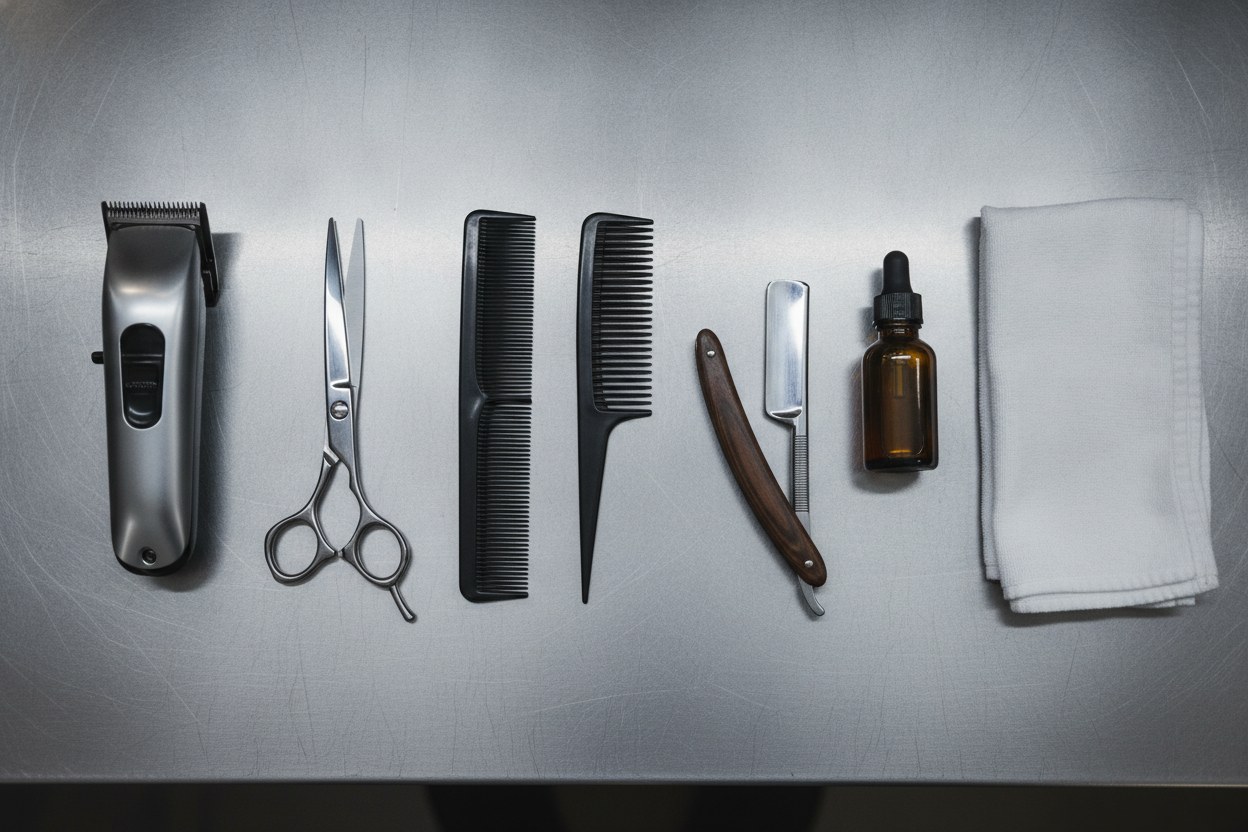
Most tool trouble gets blamed on sharpness when it is really alignment or tension — nothing a new blade fixes. The desk started logging every gap and pivot after watching barbers replace perfectly good clippers that were simply 0.6 mm out of true.
That habit became the field notes you are reading. We keep the desk small on purpose, so every number in it is one we have measured rather than guessed.
measured, not guessedA desk this small is the people at it. Everyone here cuts hair as well as keeps tools true — the edge only matters because we know what it has to do.
Trained as a barber in Kadıköy, then spent four years keeping clippers true for salons across the European side. Writes the field notes and the millimetre standard the desk reads by.

Eleven years on convex shears and clipper blades. The one who explains why a “blunt” shear is usually a slack pivot, and why tension is set by feel and then written down.

Reads the oils and sanitisers, and the difference between stainless and carbon. Built the carbon-versus-stainless logic behind the interval desk after seeing too many carbon blades rust from over-washing.