A dull blade shows up in the cut, not in the drawer.
Blade & Oil reads the barbering craft in millimetres — the guard that leaves 0.5 mm at the skin, the line-up cut a hair above where the hairline really grows, the pivot a shear quietly rides on. Every length here is named, every tool kept true between cuts, every honest limit written down rather than promised away.
A reading desk, not a barbershop. There is no booking, no checkout and no account here — nothing is sold and nothing is reserved. Just field notes on clippers, shears, combs and brushes, and on the cuts they make.
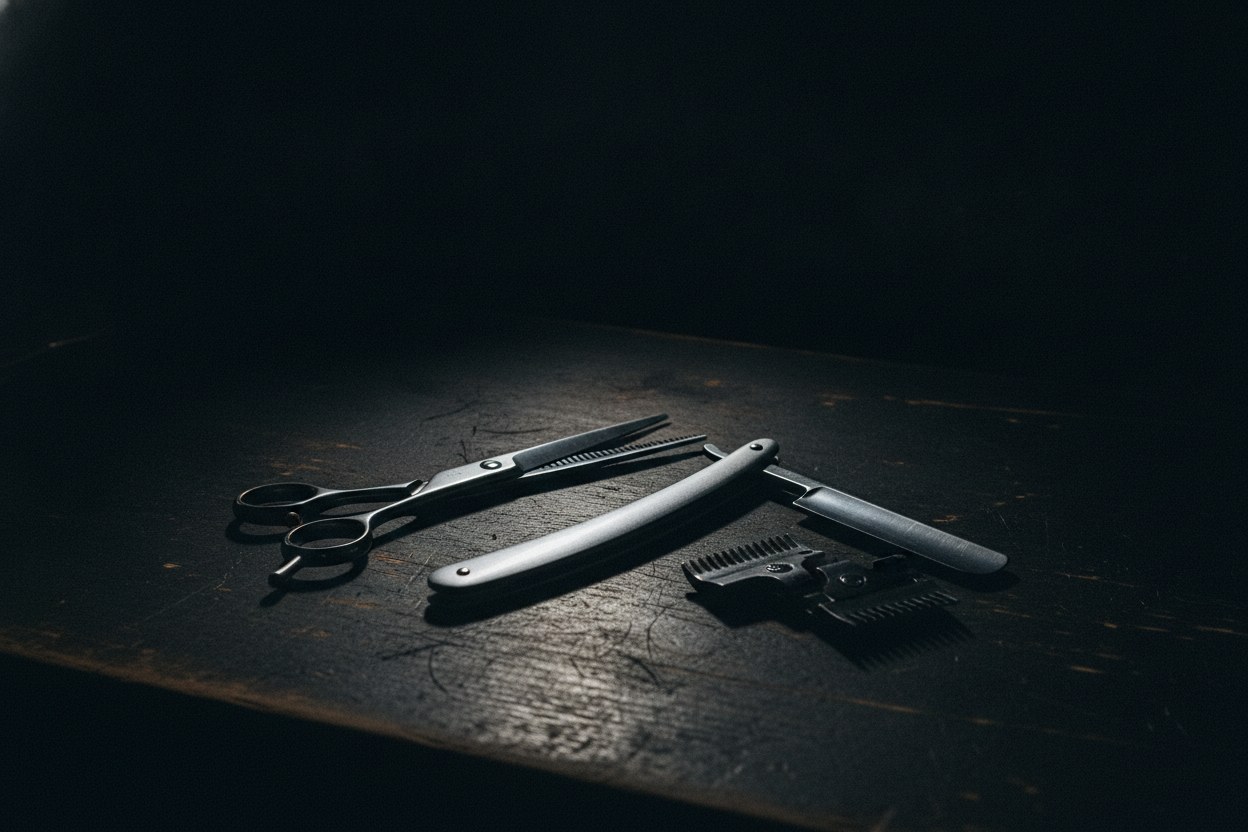
Each tool fails a different way
A clipper blade dulls at the tips and loses its gap. Carbon steel rusts between the teeth if it is left wet. A shear goes off not from a blunt edge but a slack pivot. A comb drags on a mould seam; a brush clogs and smears. Read the tool, then read its upkeep.
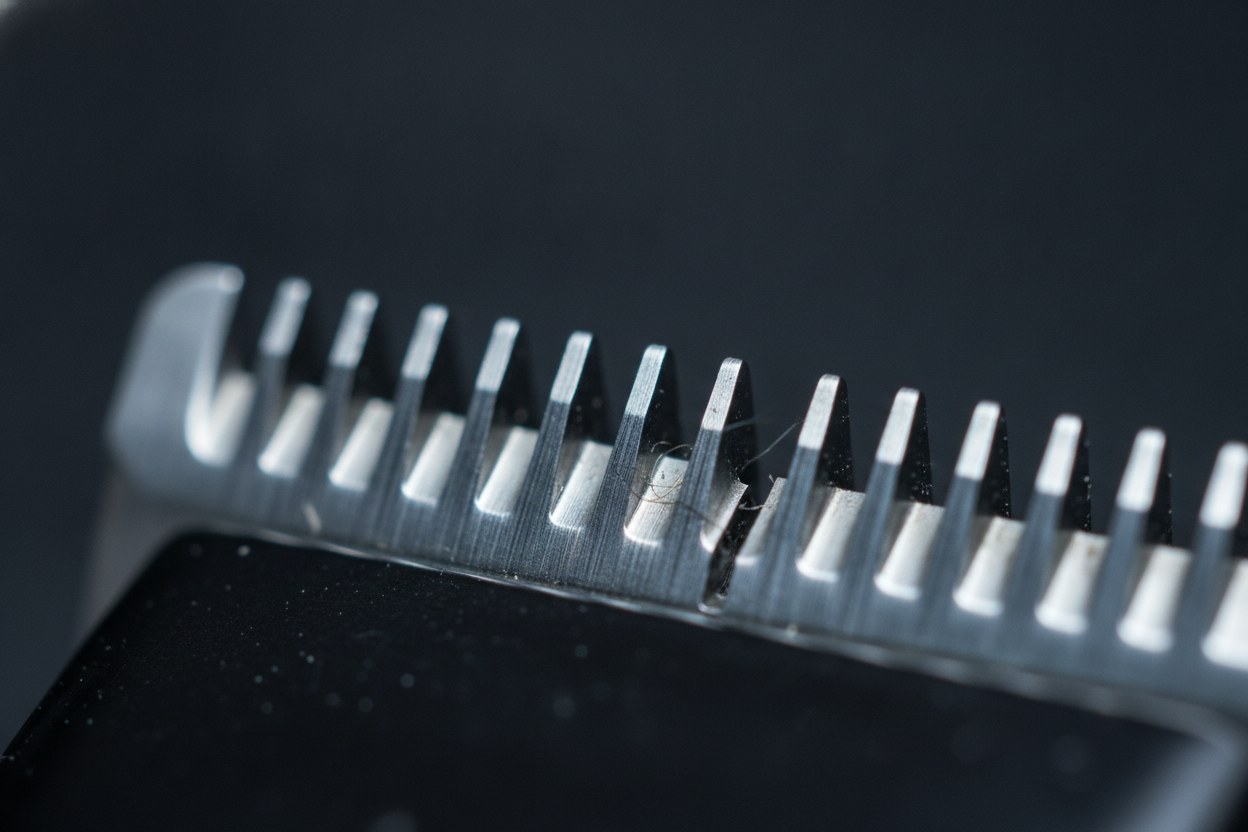
Oil, hone, align
Oil along the teeth before each session; flat-hone to the 26° bevel a few times a year; reset the gap so the moving tips sit a hair back.
No. 1 · 3 mm needs a lineCut with the corner
An outliner cuts with its very corner, so the corner wears fastest. A trimmer that no longer draws a clean line is almost never broken — it is unaligned.
30° edge zero-gapTension before hone
A convex shear rides on a ride-line, not an edge. Folding hair or a tired click is usually tension, not sharpness — and over-honing kills a good pair faster than use.
48° convex set by feelNo edge, still upkeep
A cheap comb drags where the mould seam sits between the teeth; a loaded brush stops moving cut hair and starts smearing it. Deburr the seam, wash the bristle.
seamless fortnightly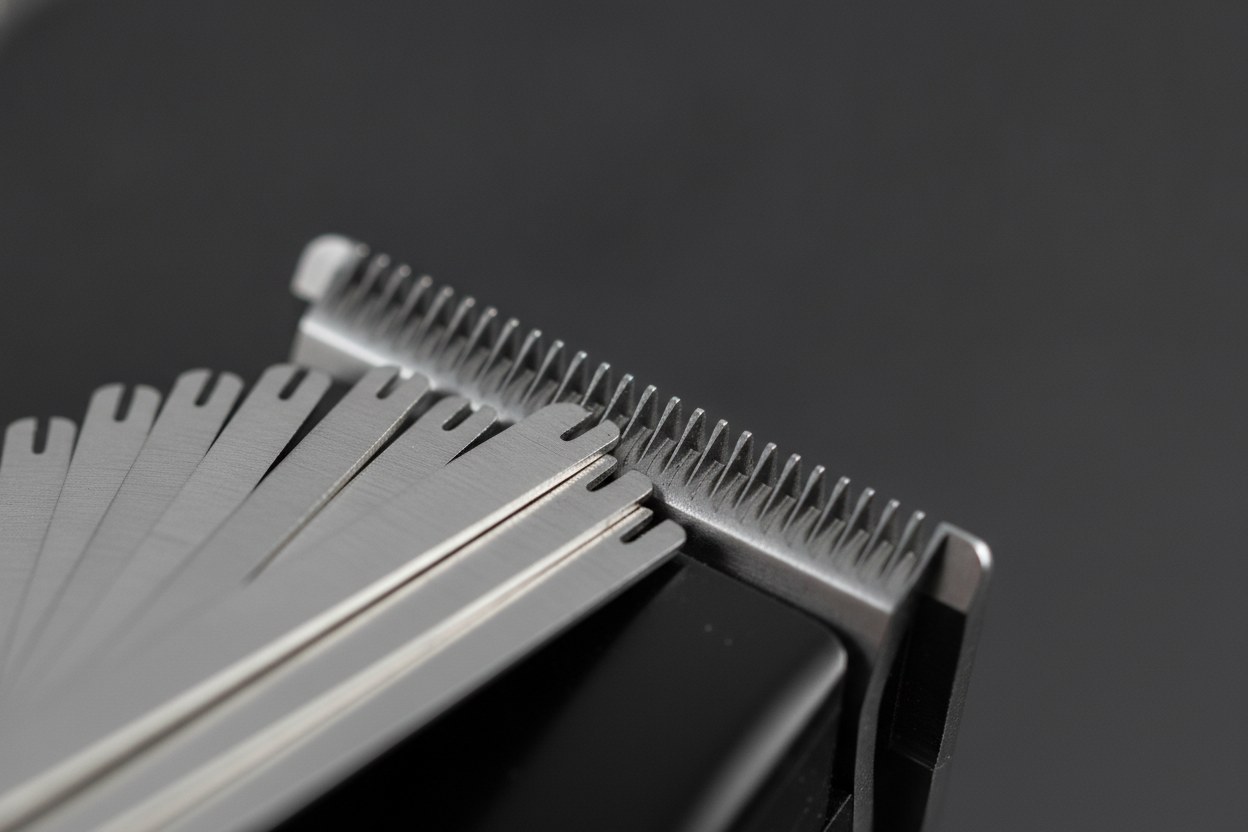
Measured, not guessed
You cannot eyeball a clipper gap. The moving blade should sit back from the fixed blade by a hair — far enough not to nick the skin, close enough to catch the hair. Here is how the reading goes, one step inward at a time.
Most tool trouble gets blamed on sharpness when it is really alignment or tension — nothing a new blade fixes. A clipper 0.6 mm out of true grabs the neck; squared, it goes quiet.
-
01
The teeth tell the gap
Moving-blade tips sit 0.4–0.8 mm behind the fixed blade. Too proud and it bites the neck; too far back and it pulls.
-
02
Bevel over polish
A blade is honed to its own angle — 26° clipper, 48° convex shear — not to a mirror finish that looks good and cuts for a week.
-
03
Tension is a feel, logged
A shear's pivot is set by hand, then written down, so the next check starts from a number instead of a shrug.
Oil is cheaper than steel
Most blades do not die from cutting. They die dry, or they die wet. A carbon blade left damp rusts in the gaps you cannot see until it drags; a stainless blade run dry runs hot and loses its temper at the tips.

-
50°C
Heat is the enemy
A dry blade climbs past fifty degrees in minutes. Oil carries the heat out; three drops along the teeth, run briefly, wipe. -
carbon · ×2
Carbon rusts, stainless stains
Carbon needs oiling roughly twice as often as stainless. The interval desk below halves the oil interval the moment a blade is marked carbon. -
spray
Sanitise between heads
Spray, not soak. Soaking a blade floods the drive and lifts the alignment the teeth were just set to.
Read your own upkeep intervals
A reference, worked out in your browser — nothing is sent anywhere, nothing is stored, nothing is booked. Put the tools on the bench, say how hard they are used and what steel they are, and read back oil, sharpen and alignment intervals with the next date for each. Carbon shortens the oil interval; occasional use stretches everything out.
Each clipper guard number adds roughly three millimetres of length. A fade starts below the smallest guard and climbs through them — so a guard number is only ever read together with its length in millimetres.
- 0
0.4 mm - 0.5
1.5 mm - 1
3 mm - 2
6 mm - 3
9 mm - 4
12 mm
- W1
- W2
- W3
- W4
- W5
- W6
The transition near the skin softens first; most skin fades read tired by week 3.
| Tool | Oil (stainless) | Hone | Align / tension |
|---|---|---|---|
| Clipper blade | weekly | ~3 months | fortnightly |
| Trimmer / outliner | weekly | ~2 months | 3 weeks |
| Shears | fortnightly | twice a year | monthly |
Add a tool
Add a row for each blade, shear, comb or brush you keep.
Carbon oil intervals are halved; daily use tightens every interval, occasional use relaxes it. Dates count forward from today, in your browser only.
Upkeep intervals
Blade & Oilreading desk
A reference, not a rule. Real intervals shift with how clean the cuts are and how the kit is stored between them.
What a cut cannot promise
The craft is worth more when its limits are said out loud. None of these are small print — they are the first thing a good barber tells you.
A skin fade holds about three weeks
The sharp transition near the skin is the first thing to soften. The length on top looks fine far longer than the fade does.
holds ≈ 3 weeksA line-up grows out crooked
A line cut a hair above the real hairline looks straight today; as it grows, the uneven hairline underneath reappears and the line seems to drift.
+1–2 mm above the growthWet hair sits shorter than it cuts
Water stretches hair straight, so it hangs lower than its dry length. Cut to a nice length wet and it springs up short dry — which is why the check is always made dry.
check it dryYou cannot level your own nape
Your elbows cannot mirror the back of your own head, so a line cut blind tilts to one side however good the clipper is. It is geometry, not skill.
needs a second pair of handsA hot towel before a straight-razor shave is not theatre — it softens the beard and opens the skin so the blade rides flat instead of scraping.
And a plain limit: hair loss, a rash or broken skin is a question for a doctor, not for a clipper. No cut, oil or routine treats a scalp condition, and nothing here claims to.
Read before you reach for the clippers
FAQ Short answers to the questions readers write in most — measured in millimetres and weeks, like everything else here.
These are answers to read, not a service to book. no booking · no checkout
How long does a skin fade hold?
About three weeks before the shortest guard length grows out of the blend. The transition near the skin softens first, which is why a fade reads tired long before the length on top does.
Why does a trimmer line-up grow out crooked?
Because a line-up is usually cut a millimetre or two above where the hair naturally grows. The cut edge is straight, but the hairline underneath is not, so as it grows back the real, uneven edge reappears and the line looks like it has drifted.
Why does hair look shorter wet than it cuts dry?
Wet hair is weighed down and stretched straight, so it sits lower than its dry length. Cutting to a satisfying length while wet almost always leaves it shorter once it dries and springs back — scissor-over-comb work is checked dry for exactly this reason.
What number guard leaves what length?
As a rough rule, each clipper guard number adds about three millimetres: a No. 1 leaves roughly 3 mm, a No. 2 about 6 mm, a No. 3 about 9 mm. Half sizes sit between. A skin fade starts below the smallest guard, with the lever and open blade doing the shortest work.
How often should a clipper blade be oiled?
A few drops along the teeth before each session of cutting is the common rhythm; a carbon blade, which rusts more readily, is oiled roughly twice as often as stainless. Oil carries heat out of the blade — a dry blade climbs past fifty degrees in minutes and loses its edge at the tips.
Can you cut your own nape level at home?
Not reliably. Your elbows cannot mirror the back of your own head, so a line cut blind tilts to one side however good the clipper is. It is a question of geometry, not skill — the back of a neck is a second pair of hands.